The best AI SEO tools in 2027 are Semrush AI Toolkit, Ahrefs Brand Radar, Surfer SEO, Profound, Peec AI, Clearscope, MarketMuse, Frase, Otterly.AI, and Scalenut. These tools help with two goals at once: ranking in classic Google results and getting cited inside AI Overviews, ChatGPT, Perplexity, and Gemini. This combined practice is called AEO (Answer Engine Optimization) or GEO (Generative Engine Optimization).
Why AI Search Optimization Matters Right Now
Search behavior has changed fast. Instead of scanning ten blue links, many users now read a short AI generated summary and stop there. That shift makes it critical for your content to be structured in a way that AI systems can read, trust, and quote directly.
Real data backs this up:
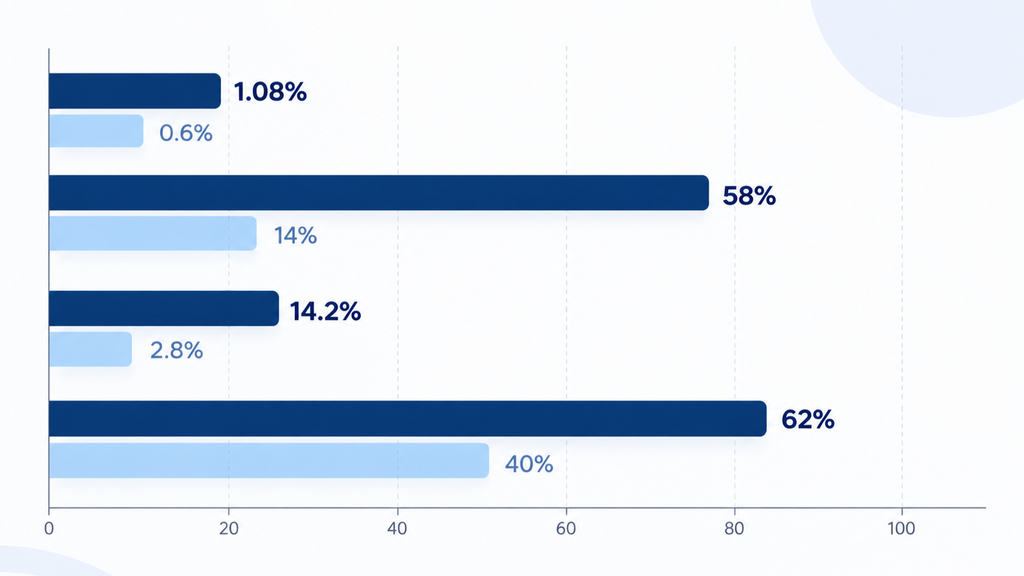
- Pages that get cited inside an AI Overview see organic click through rate rise from around 0.6% to about 1.08%, according to SeoProfy’s analysis of Google AI Overviews. That is a significant lift in visibility, even though total click volume across search overall is falling.
- A page ranked in position 1 on Google has a 58% chance of also being cited inside an AI Overview, while position 10 drops to just 14%, based on data reported by Position Digital’s AI SEO statistics report. This shows classic ranking signals still heavily influence AI citations.
- Traffic that comes from AI search converts at 14.2%, compared to only 2.8% for standard organic traffic, per the same Position Digital report. Visitors arriving through an AI recommendation tend to be further along in their decision, so they act faster once they land on your page.
- Articles that get cited by AI Overviews tend to cover roughly 62% more verified facts than articles that do not get cited, and adding clear statistics with citations can boost AI visibility by around 40%, as noted in the Position Digital statistics roundup.
These findings are useful if you want to verify the numbers yourself or study the methodology behind them further, since both sources update their data regularly.
Why Using a Mix of AI SEO Tools Works Better Than Relying on One
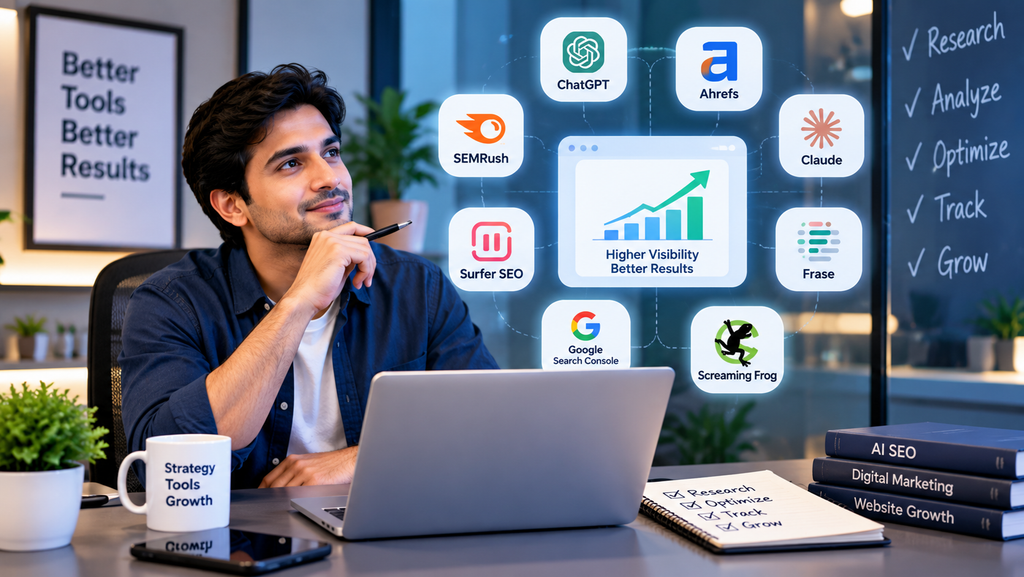
No single tool covers keyword research, technical health, content optimization, and AI citation tracking equally well. Each platform tends to specialize in one part of the workflow, which means leaning on just one tool leaves gaps somewhere else. That is why most successful teams in 2027 run a small stack rather than betting everything on one platform.
A typical setup pairs a broad data platform like Semrush or Ahrefs for rankings and backlinks, a content optimizer like Surfer or Clearscope for on page quality, and a dedicated GEO tracker like Profound or Peec AI for AI citation visibility. Running these together also gives you a feedback loop. Your rank tracker shows what is winning in classic search, your content tool shows what still needs improving, and your GEO tracker shows whether those wins are actually translating into AI citations.
Teams that only use one type of tool tend to miss half the picture. Some end up optimizing purely for rankings while ignoring AI visibility altogether, while others chase AI citations without the underlying page quality and backlinks that make those citations possible in the first place. Using tools from each category closes that gap and keeps both sides of the strategy moving together.
Top 10 AI SEO Tools to Use in 2027
1. Semrush
The most complete all-in-one SEO platform on this list. Its AI Toolkit tracks how often your brand shows up across ChatGPT, Perplexity, and Google AI Overviews, while still covering standard keyword research, backlink analysis, and technical audits. A strong pick if you want one subscription that covers everything.
2. Ahrefs
Best known for backlink data, and its Brand Radar feature now shows where competitors are earning mentions inside AI generated answers. Useful for reverse engineering which sources AI models trust most in your niche.
3. Surfer SEO
A focused content optimization tool. It compares your draft against top ranking pages and scores structure, keyword coverage, and depth. This kind of structure is exactly what makes content easy for AI systems to extract and quote.
4. Profound
A tool built specifically for GEO tracking. It shows the real prompts people are asking that trigger a citation of your site, and benchmarks your visibility against competitors across ChatGPT, Gemini, and Perplexity.
5. Peec AI
A lighter, more affordable option for AI visibility tracking and competitor benchmarking. A good entry point for smaller teams who want to start monitoring GEO performance before investing in a larger platform.
6. Clearscope
A content grading tool that measures topical depth against top performing pages. It helps ensure your content is comprehensive enough on a subject to be treated as a trustworthy source.
7. MarketMuse
Uses AI to map topical gaps across your entire website rather than just single pages. Helpful for building the broader site level authority that AI Overviews tend to favor when choosing sources.
8. Frase
Combines AI generated content briefs, competitor SERP analysis, and an on page optimization score in one lightweight workflow. Good for teams producing content regularly and needing speed.
9. Otterly.AI
Tracks how often your brand is mentioned inside ChatGPT and Perplexity answers specifically, giving you a simple visibility score you can monitor over time.
10. Scalenut
An AI content planning and optimization suite that pairs keyword clustering with on page scoring. Useful for scaling AEO ready content production without needing a large content team.
How to Choose the Right Tool for You

- If you are just starting to track AI visibility, begin with Peec AI or Otterly.AI.
- If you want a single platform that covers everything from keywords to AI citations, choose Semrush or Ahrefs.
- If your main focus is writing content that gets cited, use Surfer, Clearscope, or Frase.
- If you need enterprise level monitoring across many AI platforms, Profound is the strongest option.
Frequently Asked Questions
Do AI SEO tools guarantee my page will appear in AI Overviews?
No tool can guarantee inclusion. What these tools do is improve your odds by aligning your content with the patterns AI systems tend to favor, such as clear structure, sourced statistics, and demonstrated expertise. The final decision on what gets cited always comes from the AI model itself.
Is GEO replacing traditional SEO?
Not currently. Data from Position Digital shows a large share of AI Overview citations also rank in Google’s top 10 organic results, meaning traditional ranking signals still strongly influence what AI systems choose to cite. GEO works alongside SEO rather than replacing it.
How many tools should I actually use?
Most teams do well pairing one all in one platform such as Semrush or Ahrefs with one dedicated AI visibility tracker such as Profound or Peec AI, plus one content optimization tool such as Surfer or Clearscope.
